
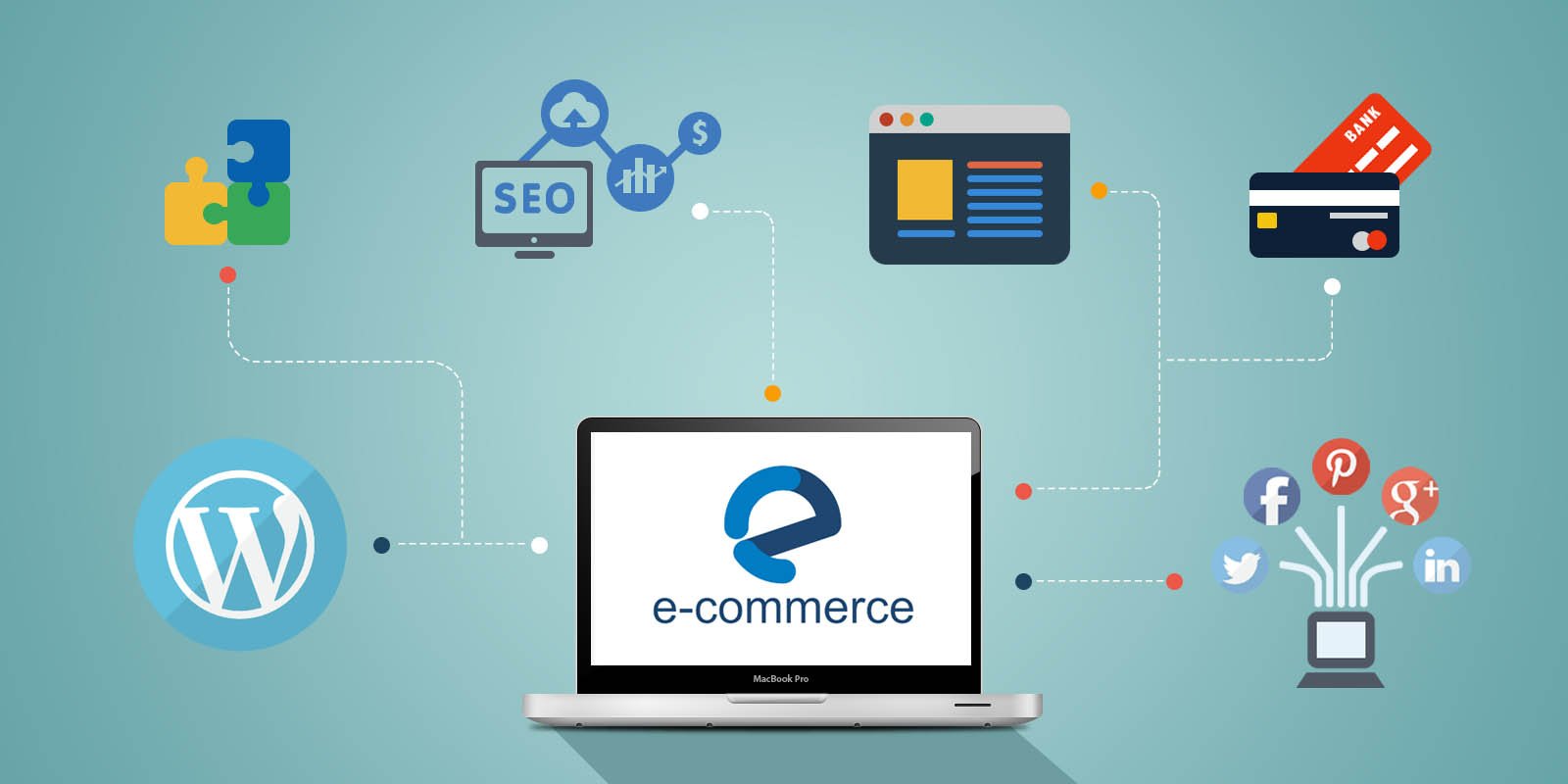
Why Developing an E-commerce Website Is Essential for Businesses
The shift from physical retail to digital commerce is not a trend that peaked and passed; it is a structural change in how businesses operate and how consumers buy. Global e-commerce revenue surpassed $5.8 trillion in 2023 and continues to grow year over year, with the Middle East and North Africa region among the fastest-growing e-commerce markets globally. For any business selling physical or digital products, the question is no longer whether to Develop E-commerce Website; it is how to build one that actually drives revenue.
An e-commerce website is the most scalable sales asset a business can own. It operates around the clock, serves customers across geographies without additional staffing, and compounds in value as its organic search presence, customer database, and brand recognition grow over time. A physical store serves whoever walks through the door. A well-built online store serves everyone who searches for what you sell, and with the right SEO and digital marketing strategy behind it, that audience can be enormous.
At Ace Digital Marketing, we build e-commerce websites and digital platforms for businesses across the GCC and MENA region, from full bilingual stores with hundreds of products to professional B2B platforms designed for high-value lead generation. This guide covers everything you need to know to plan, build, and launch an online store that performs from day one.
Understanding the Basics of E-commerce Websites
What Is an E-commerce Website
An e-commerce website is a digital platform that enables commercial transactions, the buying and selling of products or services, between a business and its customers, or between individuals, entirely through the internet. At its most fundamental level, it is a website with a product catalog, a shopping cart, a payment system, and an order management process. In practice, the most effective e-commerce websites are far more sophisticated, integrating inventory management, customer account systems, email marketing, analytics, and search engine optimization into a unified digital commerce experience.
The defining characteristic of an e-commerce website is that the transaction itself, not just the research or discovery, happens online. A website that displays products and directs users to call for pricing is a brochure site. A website where users select products, choose specifications, enter payment information, and receive order confirmation is an e-commerce site. This distinction matters for both platform selection and for understanding the technical requirements of a successful online store build.
Key Components of a Successful Online Store
Every high-performing e-commerce website shares a set of core components that work together to move a visitor from arrival to purchase. The product catalog, organized with clear categories, accurate product data, high-quality images, and detailed descriptions, is the foundation on which everything else rests. A catalog that is difficult to navigate, poorly photographed, or lacking in product detail will fail to convert visitors regardless of how much traffic the site receives.
The shopping cart and checkout system must be frictionless; every additional step, form field, or obstacle between product selection and order confirmation reduces the probability of purchase completion. Payment gateway integration must support the payment methods most commonly used by the target customer base. Order and inventory management must accurately reflect stock levels and communicate order status clearly to customers. And across all of these components, the design must be visually professional, load quickly, and function flawlessly on mobile devices.
Types of E-commerce Business Models
E-commerce operates across several distinct business models, each with different platform requirements, audience dynamics, and growth strategies. B2C, Business to Consumer, is the most familiar model: a company selling products directly to individual end consumers. B2B, Business to Business, involves selling products or services from one company to another, typically in larger volumes, with more complex pricing and procurement processes. C2C, Consumer to Consumer, describes platforms where individuals sell to other individuals, as on marketplace platforms. C2B, Consumer to Business, is less common but growing, with individuals offering services or content to businesses.
Understanding which model applies to a specific business determines the platform features required, the content strategy needed to attract the right audience, and the conversion path that the website must facilitate. A B2B website selling private-label manufacturing services has fundamentally different requirements than a B2C store selling garden products directly to homeowners.
How to Build an E-commerce Site from Scratch
Choosing the Right Platform
Platform selection is the most consequential early decision in any e-commerce website build. The platform determines what is technically possible, how the site scales as the business grows, what level of technical expertise is required for ongoing management, and what the long-term cost structure of the website looks like. The wrong platform choice is expensive to reverse; migrating an established e-commerce site from one platform to another is a significant technical undertaking that can disrupt both rankings and operations.
WooCommerce, the e-commerce plugin for WordPress, is the most widely deployed e-commerce platform globally, offering maximum flexibility and extensibility for businesses that need a tailored solution and are comfortable with the WordPress ecosystem. It is the platform we used for Green Gardens, Riyadh’s premier garden design and outdoor products company, where we built a complete bilingual WooCommerce store with over 200 products across nine categories, serving both Arabic-speaking Saudi customers and English-speaking expats across the Kingdom. The platform’s flexibility made it possible to deliver full RTL Arabic support, custom category taxonomies, and a mobile-first shopping experience that reflects the brand’s premium identity.
Shopify is the leading hosted e-commerce solution, offering simplicity and reliability with less technical overhead, ideal for businesses that want to manage their store without deep technical involvement. Magento and BigCommerce serve enterprise-scale operations with complex catalog and pricing requirements. Each platform has genuine strengths and limitations, and the right choice depends on the specific business requirements, budget, and technical resources available.
Securing Domain and Hosting
The domain name is the online address of the business, and for e-commerce, it carries both brand and SEO implications. A domain that closely matches the brand name, is easy to remember, and ends in a recognized top-level domain, .com for most international businesses, or country-specific TLDs like .sa or .qa for locally focused stores, establishes credibility and aids organic discovery. Domain selection should be treated as a branding decision, not a technical afterthought.
Hosting for e-commerce websites requires more careful consideration than for informational sites. E-commerce platforms, particularly WooCommerce running on WordPress, are more resource-intensive than simple content sites, and the hosting environment directly affects page load speed, which in turn affects both user experience and search engine rankings. Managed WordPress hosting providers, including Kinsta, WP Engine, and SiteGround, provide server environments specifically optimized for WordPress and WooCommerce, with caching, security, and performance configurations that would require significant technical expertise to replicate on a generic hosting plan.
SSL certification, the technology that encrypts data transmitted between the user’s browser and the web server, visible as the padlock icon in browser address bars, is a non-negotiable requirement for any e-commerce site. Without SSL, browsers actively warn users that the site is not secure, and the site will be ineligible to process most payment methods. Most reputable hosting providers include SSL as standard.
Setting Up Store Structure and Navigation
Store structure defines how products are organized and how customers navigate from arrival to purchase. An effective e-commerce navigation structure presents the product catalog in a logical hierarchy that mirrors how customers naturally think about the products, not how the business internally categorizes its inventory. Category naming should use the language customers use when searching, not internal product codes or technical designations.
The navigation hierarchy for most e-commerce sites should allow users to reach any product category within two clicks from the homepage, and any individual product within three clicks. Deeper structures, where users must navigate through four or more levels to reach a product, create friction that reduces the probability of purchase and signals to search engines that the buried pages are of lower priority.
Design for an E-commerce Website That Converts
User-Friendly UX and UI Design
The design of an e-commerce website serves a single primary purpose: removing every obstacle between a visitor’s arrival and their decision to purchase. UX design, User Experience, determines how intuitively users can find what they are looking for, how clearly product information is presented, and how smoothly the checkout process flows. UI design, User Interface, determines how visually appealing and brand-consistent the experience is at every interaction point.
For e-commerce, these two disciplines must work together with conversion as the north star. A visually stunning website with confusing navigation will underperform a less beautiful website where users can effortlessly find and purchase products. The best e-commerce design achieves both, communicating brand quality through visual excellence while making the shopping process feel natural and effortless. Our detailed exploration of design UX UI principles covers the foundational thinking that drives conversion-focused design decisions for any digital product.
Mobile Optimization and Responsiveness
Mobile-first is not a design philosophy choice for e-commerce in 2025; it is a market reality. According to Statista’s mobile commerce data, the majority of e-commerce browsing and a growing proportion of e-commerce transactions now happen on smartphones, with the proportion continuing to increase year over year. In Saudi Arabia and Qatar specifically, mobile internet usage rates among the highest in the world make mobile-first design a prerequisite, not an enhancement.
Mobile optimization for e-commerce goes beyond responsive layouts that reflow content to smaller screens. It requires touch-friendly interactive elements with sufficient tap targets, product images that remain clear and compelling on smaller displays, simplified navigation that is accessible without a traditional desktop menu, and checkout flows that minimize typing on mobile keyboards. Every page of an e-commerce site, from the homepage through category pages to individual product pages and checkout, must be designed and tested on actual mobile devices, not just previewed in a desktop browser’s mobile simulation.
Product Page Design and Layout
The product page is where purchase decisions are made, and its design has a more direct impact on conversion rate than any other individual page on an e-commerce site. An effective product page layout provides: high-quality product imagery from multiple angles that allows the customer to visually evaluate the product; a clear, specific product title with the key identifying information; pricing displayed prominently without requiring the user to scroll; a concise but comprehensive product description that addresses the key questions a customer would have before purchasing; clear size, color, or specification selection options where applicable; a prominent, high-contrast add-to-cart button positioned above the fold; and customer reviews that provide social proof and answer questions the product description may not address.
Developing an E-commerce Website Step by Step
Adding Products and Categories
Product entry is frequently the most time-consuming phase of an e-commerce website build, and the quality of product data directly determines both the searchability and the conversion rate of each listing. Every product requires: a unique, keyword-relevant title that describes the product accurately and matches how customers search for it; a detailed description that covers key specifications, use cases, and differentiating features; high-quality product photography in multiple views; accurate pricing; inventory status; and category assignment that places the product correctly within the store’s navigation hierarchy.
For stores with large catalogs, bulk import via CSV or product data feed significantly reduces the time required to populate the store, but requires careful data preparation to ensure that the imported data is clean, complete, and correctly formatted for the platform. The Green Gardens store, for example, required uploading and organizing over 200 products across nine distinct categories in both Arabic and English, a process that demanded systematic data management to ensure every product was accurately represented in both language versions of the store.
Setting Up Payment Gateways
Payment gateway integration connects the store’s checkout process to the financial systems that process card and digital payments. For e-commerce stores serving GCC markets, the payment gateway selection must reflect the payment methods most commonly used by the target customer base. Credit and debit card processing, through Stripe, PayTabs, or Telr for the Saudi market, is standard. MADA card acceptance is essential for Saudi-facing stores. Buy Now Pay Later options and digital wallets, including Apple Pay and Google Pay, are increasingly expected by younger consumers.
Payment gateway setup involves both the technical integration, connecting the gateway to the store’s checkout flow and configuring webhooks for order status updates, and the commercial setup, registering with the payment provider, completing business verification, and configuring payout schedules. Security configuration, including 3D Secure authentication for card payments and PCI-DSS compliance considerations, must be addressed at the gateway level rather than left as afterthoughts.
Configuring Shipping and Delivery Options
Shipping configuration defines the rules and costs that apply to order delivery, and the clarity and reasonableness of the shipping experience have a significant impact on cart abandonment rates. Research published by the Baymard Institute, one of the leading UX research organizations for e-commerce, consistently identifies unexpected shipping costs revealed at checkout as one of the primary causes of cart abandonment.
Shipping configuration involves: defining shipping zones that correspond to the geographic areas the store serves; setting shipping rates for each zone, flat rate, weight-based, or free above a minimum order value; integrating with shipping carriers for real-time rate calculation where applicable; and configuring order management workflows that ensure orders are processed, packed, and dispatched efficiently. For stores with physical delivery promises, same-day or next-day delivery, the shipping configuration must accurately reflect the operational capacity behind those promises.
How to Build an E-commerce Store That Drives Sales
Creating High-Converting Product Pages
Beyond the foundational design elements discussed earlier, high-converting product pages employ specific persuasion and trust signals that move undecided visitors toward purchase. Scarcity indicators, “only 3 left in stock”, create urgency without fabrication when they reflect actual inventory. Social proof signals, “bestseller” or “most popular” badges, leverage the psychological influence of peer behavior. Comparison information, “customers also viewed” or “frequently bought together”, increases average order value by surfacing additional products at the moment of highest purchase intent.
Product page copywriting for e-commerce should focus on outcomes and benefits rather than features and specifications alone. A customer buying a garden pot cares about how it will look on their terrace and whether it will survive outdoor conditions, not primarily about its diameter in centimeters. Leading with the customer-relevant benefit and supporting with the technical specification produces copy that both converts visitors and ranks well for the informational queries customers use in product research.
Using Reviews and Social Proof
Customer reviews are the most powerful trust-building mechanism available on an e-commerce product page. According to research from the Nielsen Norman Group and multiple e-commerce conversion optimization studies, products with reviews convert at significantly higher rates than those without, and the effect is most pronounced for new customers who have no prior relationship with the brand and rely on peer evidence to assess product quality.
Implementing a review system on an e-commerce website requires both the technical infrastructure, a review plugin or platform integration, and the operational process for soliciting reviews from customers after their order is delivered. Post-purchase email sequences that request reviews at the appropriate interval after delivery, typically seven to fourteen days, after the customer has had time to use the product, produce the most genuine and useful review content.
Optimizing Checkout Experience
The checkout process is where the majority of e-commerce revenue is either captured or lost. Cart abandonment rates across e-commerce consistently average around 70% or higher according to Baymard Institute data, meaning that seven out of ten customers who add a product to their cart do not complete the purchase. Checkout optimization is therefore one of the highest-return improvements available to any established e-commerce operation.
The primary checkout optimization priorities are: reducing the number of steps required to complete a purchase; enabling guest checkout so users are not required to create an account before purchasing; displaying order summary information throughout the checkout process so users always know what they are buying and for how much; and making the checkout feel secure by displaying trust signals, SSL indicators, accepted payment method logos, and return policy information, at the point where users are most anxious about transaction security.
SEO and Performance Optimization for E-commerce Websites
Optimizing Site Structure for Search Engines
E-commerce websites have inherent SEO complexity that informational sites do not. Large product catalogs generate thousands of pages that must be structured, indexed, and maintained in a way that maximizes organic search visibility without creating duplicate content and crawl budget issues that commonly limit e-commerce SEO performance.
The foundational SEO requirements for e-commerce are: clean, descriptive URL structures that include relevant keywords for category and product pages; unique title tags and meta descriptions for every page, not auto-generated templates that produce near-identical metadata across hundreds of products; proper canonical tag implementation to handle the duplicate content that product sorting, filtering, and pagination naturally generate; and an XML sitemap that includes all indexable product and category pages while excluding low-value parameter URLs.
Our article on SEO for new websites covers the foundational SEO architecture decisions that determine how quickly a new e-commerce site can build organic visibility, principles that apply from the first day of the store’s operation.
Improving Page Speed and Core Web Vitals
Page speed is a confirmed Google ranking factor and a direct conversion rate factor. Research from Google consistently shows that every additional second of page load time reduces conversion probability, with mobile users showing particular sensitivity to loading delays. For e-commerce sites with large image catalogs and complex page structures, achieving strong page speed scores requires deliberate technical optimization.
Key page speed optimizations for e-commerce include: image compression and next-generation format delivery, converting product images to WebP format and serving them at the correct display size rather than relying on CSS scaling; lazy loading for below-the-fold images so the browser does not need to load the entire page before the first paint; JavaScript deferral for non-critical scripts; and leveraging browser caching and CDN delivery to reduce server response times.
Core Web Vitals, Largest Contentful Paint, Cumulative Layout Shift, and Interaction to Next Paint are the specific user experience metrics Google uses as ranking signals. E-commerce sites with strong Core Web Vitals scores benefit in both rankings and conversion rates, because the same technical quality that impresses Google’s systems also creates a better shopping experience.
Driving Organic Traffic to Your Store
Organic search is the most sustainable and highest-margin traffic source available to e-commerce businesses; it generates qualified visitors who are actively searching for the products being sold, without the per-click cost of paid advertising. Building organic traffic for an e-commerce store requires SEO work across three areas: on-page optimization that makes every product and category page as relevant as possible for the queries it should rank for; technical SEO that ensures Google can crawl, index, and accurately evaluate every page; and authority building through backlinks and brand mentions that establish the store’s domain credibility in its competitive market.
Category pages are particularly important for organic traffic; they can rank for the broad, high-volume category terms that individual product pages cannot, capturing buyers at the research stage of their journey and funneling them toward specific products. Category pages with genuine editorial content, buying guides, category introductions, and comparison guidance perform significantly better in organic search than pages that contain only a product grid.
Common Mistakes When You Create an E-commerce Website
Poor Website Structure
The most structurally damaging mistake in e-commerce development is building a site without a clear, pre-planned information architecture. Sites built without structural planning tend to accumulate category and product pages without a coherent organizational logic, producing navigation structures that confuse users and URL hierarchies that send mixed signals to search engines. Retroactive structural reorganization, once products are indexed, backlinks have accumulated, and customers are familiar with existing URLs, is far more disruptive and expensive than building the right structure from the outset.
The solution is to plan the complete category hierarchy, URL convention, and navigation structure before any development begins, and to validate that structure against how target customers actually search for and think about the products being sold.
Complicated Checkout Process
A checkout process with unnecessary account registration requirements, excessive form fields, unclear pricing, including shipping costs revealed only at the final step, or limited payment options is a direct revenue leak that no amount of traffic can compensate for. Each additional friction point in the checkout reduces the probability of completion, and the cumulative effect of multiple friction points can reduce conversion rates dramatically.
The benchmark for checkout optimization is removing everything that is not necessary to process the order, and then testing each remaining element to verify that it cannot be further simplified or eliminated.
Ignoring SEO and Mobile Users
Launching an e-commerce website without SEO architecture in place from day one is a costly decision to reverse. Search engines index pages from the first crawl, forming initial assessments of URL structures, content quality, and site organization that subsequently influence how rankings develop. An e-commerce site launched with poor URL structures, missing metadata, or duplicate content across category variations will accumulate negative SEO signals that require significant effort to overcome, an effort that would have been unnecessary if the architecture had been correct at launch.
Similarly, treating mobile optimization as a post-launch enhancement rather than a core build requirement produces a site that generates significant organic and paid traffic while converting a small fraction of it, because the majority of visitors are experiencing the site on devices for which it was not properly designed.
How to Start an E-commerce Site Successfully
Validating Your Product Idea
Before investing in e-commerce website development, validating that there is genuine market demand for the products being sold is the risk-reducing step that most first-time e-commerce operators skip in their eagerness to launch. Validation does not require expensive market research; search volume data from tools like Google Keyword Planner and Ahrefs reveals how many people are actively searching for the products; competitor analysis reveals the landscape of existing providers and the gaps they may be leaving; and pre-launch landing pages or social media engagement can gauge real consumer interest before any significant development investment is made.
Planning Marketing and Growth Strategy
An e-commerce website without a marketing strategy is an expense, not an investment. The marketing strategy should be planned in parallel with the website build, not as an afterthought once the store is live. The strategy should define: how organic traffic will be built through SEO and content; which paid advertising channels will be used and at what initial budgets; how social media will support both traffic and conversion; and how email marketing will be used to retain customers and generate repeat purchases.
The Nutrolab website, a Saudi-based exclusive agent of Revon Pharma Canada, specializing in private label manufacturing of supplements and cosmetics, illustrates how digital presence and marketing strategy must work together from the beginning. The website was built not just as a digital brochure but as a B2B lead generation engine, with every page structure, call-to-action placement, and content decision made in service of converting qualified business visitors into partnership inquiries. The result is a platform that serves more than 400 clients across Saudi Arabia, GCC, and MENA, with a digital presence that reflects the professionalism and credibility of the business behind it.
Launching and Testing Your Website
A structured pre-launch testing process, covering functionality, performance, mobile experience, payment processing, and order management workflows, prevents the customer-facing failures that erode trust at the most critical moment: the first impression. Every checkout flow should be tested end-to-end with test transactions. Every category and product page should be verified for correct display on multiple devices and browsers. Email order confirmation and shipping notification workflows should be tested. And Google Search Console should be connected and the sitemap submitted on or before launch day, so indexing begins immediately.
The 4 Types of E-commerce Explained
B2C (Business to Consumer)
B2C e-commerce is the most widely recognized model, a business selling products or services directly to individual end consumers through an online store. The Green Gardens e-commerce store is a B2C operation: individual homeowners, garden enthusiasts, and landscape design customers browse and purchase plants, furniture, lighting, and outdoor accessories directly through the store. B2C e-commerce prioritizes ease of use, visual appeal, and frictionless checkout, because individual consumers make purchasing decisions quickly and emotionally, and any friction in the buying process increases the probability of abandonment.
B2B (Business to Business)
B2B e-commerce involves transactions between businesses, typically featuring larger order volumes, more complex pricing structures, and longer sales cycles than B2C. The Nutrolab platform serves B2B customers, brands, distributors, and businesses looking for a private-label manufacturing partner, and the website’s architecture reflects the different decision-making process of B2B buyers: more detailed service information, stronger credibility signaling, and conversion paths designed for inquiry generation rather than immediate transaction completion.
C2C (Consumer to Consumer)
C2C e-commerce platforms facilitate transactions between individual consumers, and marketplace platforms where private sellers list products for other private buyers. This model requires platform infrastructure that manages listings, payments, trust, and dispute resolution between parties who have no prior relationship. Marketplace platforms like Amazon Marketplace and regional equivalents operate on this model alongside B2C retail.
C2B (Consumer to Business)
C2B e-commerce, less common but growing, involves individuals offering products or services to businesses. Freelance platforms, stock photography sites, and influencer marketing marketplaces are examples of C2B digital commerce. The business value proposition flows from individual to organization rather than in the traditional direction, with platforms acting as a matching and transaction infrastructure between the two sides.
FAQs About Developing an E-commerce Website
How Do I Build My Own E-commerce Website
Building an e-commerce website requires five sequential steps: selecting a platform that matches your technical resources and business requirements; securing a domain name and hosting environment; building the store structure, including categories, navigation, and design; populating the product catalog with complete, optimized product data; and configuring payment processing, shipping, and order management. For businesses without technical development experience, working with an experienced web development agency provides access to the expertise needed to make correct platform and architecture decisions from the outset, avoiding the costly retrofitting that results from early mistakes.
The InsuGreen project, a full bilingual website built from the ground up for Qatar’s premier EIFS thermal insulation and exterior design contractor, illustrates how professional development delivers a complete digital presence that would be extremely difficult for a non-technical business owner to achieve independently: six fully custom pages, complete Arabic-English bilingual functionality with proper RTL layout, an integrated project portfolio, blog infrastructure for long-term SEO growth, and a lead generation system with WhatsApp integration, all deployed and live with performance optimization and SSL configuration in place. You can see the complete scope of this and other web development projects through our work portfolio.
How to Start an E-commerce Site
Starting an e-commerce site begins with product validation, confirming that genuine search demand exists for what you intend to sell. Then it moves to platform selection, domain registration, and hosting setup; store design and development; product catalog population; payment and shipping configuration; pre-launch testing; and finally launch with an active marketing strategy, SEO, paid advertising, social media, and email marketing, working from day one to drive qualified traffic to the new store.
What Are the 4 Types of E-commerce
The four primary e-commerce models are Business to Consumer (B2C), companies selling directly to individual buyers; Business to Business (B2B), companies selling to other companies; Consumer to Consumer (C2C), individuals selling to other individuals through marketplace platforms; and Consumer to Business (C2B), individuals selling products or services to companies. Each model has different platform requirements, audience characteristics, and marketing strategies, and understanding which model applies to a specific business is the prerequisite for making correct decisions about website architecture, content, and conversion design.
Action Plan to Create and Grow Your E-commerce Website Successfully
The sequence that produces a successful e-commerce website launch, one that generates organic traffic, converts visitors, and grows sustainably, follows a specific order that should not be abbreviated. Start with product and market validation to confirm demand before investing in development. Select the platform that best matches your catalog size, technical resources, and growth plans. Plan the complete site architecture, URL structure, category hierarchy, navigation design, and SEO framework before writing a line of code or entering a single product.
Build the store with mobile-first design, performance optimization, and SEO architecture in place from the beginning, not as retrofitted additions after launch. Populate the product catalog with complete, optimized data in every field. Configure payment processing, shipping, and order management, and test them end-to-end before going live. Then launch with a marketing strategy that begins generating traffic immediately, through paid advertising for initial traction and SEO for sustainable long-term growth.
Conclusion
Developing an e-commerce website that performs, that attracts the right customers, converts them efficiently, and scales as the business grows, requires getting a series of sequential decisions right: platform selection, site architecture, design quality, product data completeness, SEO foundations, and marketing strategy. Each of these decisions is consequential, and mistakes in any of them produce costs that compound over time.
The businesses that build the most effective online stores are those that invest in getting these fundamentals right from the beginning, either through developing the expertise internally or by working with partners who have built and launched successful e-commerce operations across multiple markets and industries. Whether you are building your first online store or rebuilding an existing one that is underperforming, Ace Digital Marketing brings the strategic thinking and technical execution to build an e-commerce presence that works. Whether you prefer a direct call or a quick email, we will get in touch and build the right solution for your specific products, market, and growth objectives. Grow your business now!