
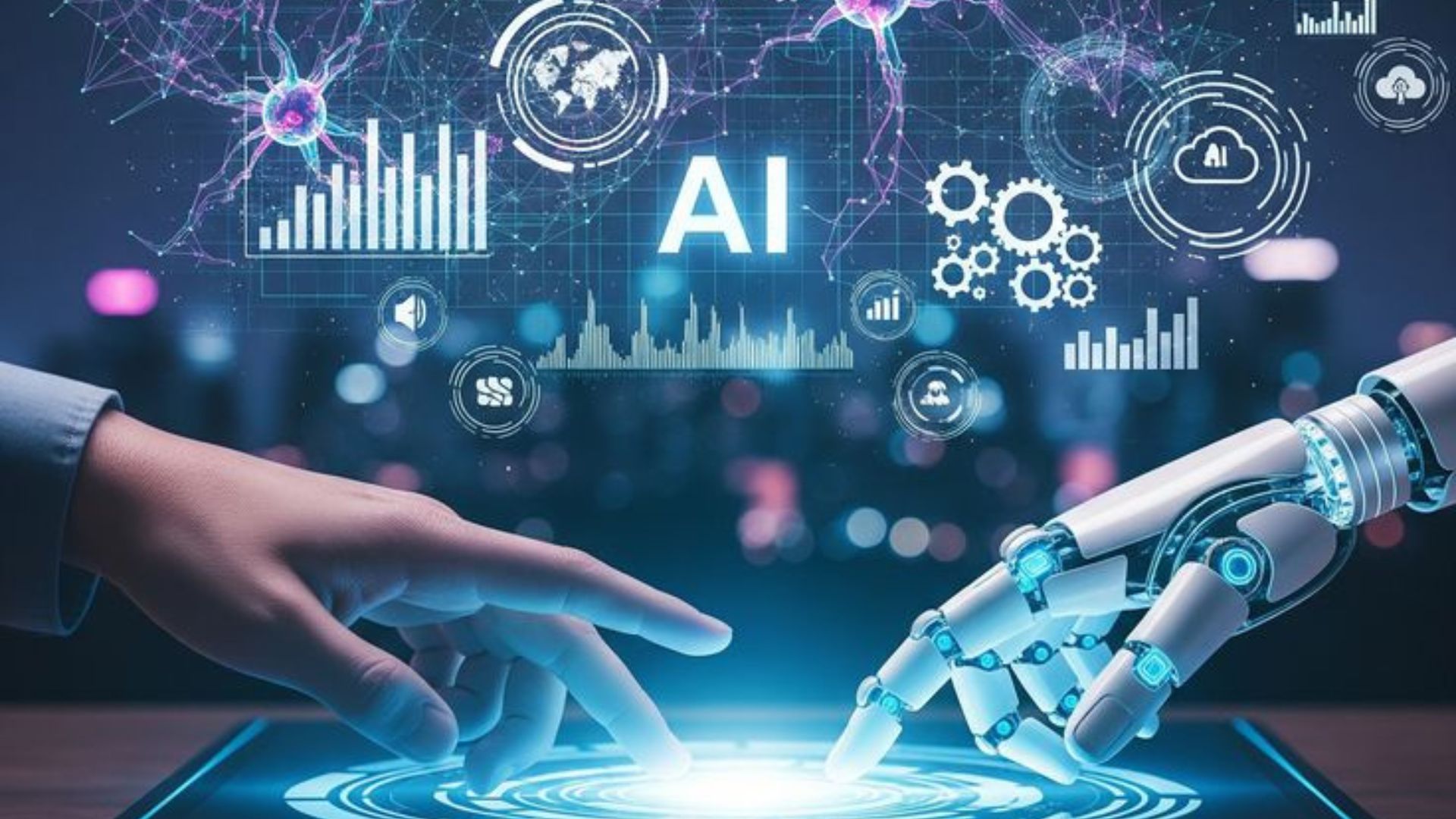
Intelligent automation is no longer a futuristic idea or a secondary technical option; it has become the most realistic way to manage businesses in a rapidly changing environment. Any company that still relies on manual execution in decision-making, task repetition, or performance monitoring is paying a hidden cost in wasted time and opportunities. Today, real value doesn’t come from working more, but from working smarter.
When we enter the world of intelligent automation, we’re not just talking about tools that execute tasks automatically, but about a different thinking system. A system that understands data, connects events, and suggests the appropriate action at the right time. This transformation is a direct result of the intersection of automation and artificial intelligence, where systems no longer merely execute but learn and improve with each new interaction.
Many confuse tools with results. Understanding what automation is correctly means realizing that it’s not just about speeding up work, but redesigning the way processes flow from the ground up. When robotic process automation is applied within any business activity, randomness disappears, and a clearer picture of performance emerges, whether in marketing, sales, or customer service. Here, systems begin to support humans instead of constraining them.
Remarkably, modern automation systems don’t work in isolation from other platforms but integrate with customer relationship management tools to create a comprehensive view of the user, journey, and decision. This integration is what makes automation with artificial intelligence a pivotal element in building a smoother experience, more accurate performance, and growth that can be continuously measured and improved.
This article doesn’t discuss automation as a ready-made solution, but as a work methodology. We’ll break down how to start, where to apply it intelligently, and how it transforms from just a technology into a real competitive advantage. Because the question is no longer: Do we use automation? But rather: Are we using intelligent automation in a way that actually serves our goals?
Analyzing Gaps and Defining Automated Objectives
Any project that begins implementing intelligent automation without a clear understanding of its current state often ends up with a complex system that doesn’t add real value. The starting point is always gap analysis: Where is time wasted? Where do errors repeat? And where does decision-making depend on estimation rather than data? This analysis doesn’t require complex tools, but an honest look at daily workflow.
When linking this analysis with the automation and artificial intelligence methodology, the picture becomes clearer. Intelligent systems can uncover hidden bottlenecks within processes, whether in the approval cycle, customer follow-up, or data transfer between departments. Here, the role of intelligent automation becomes transforming these gaps into clear intervention points.
Defining automated objectives doesn’t mean automating everything at once. The idea is to choose processes that achieve the highest impact with the least complexity. For example:
- Reducing customer response time
- Improving data accuracy
- Accelerating decision-making
These are measurable objectives that can be directly linked to robotic process automation within the automation system.
Most importantly, objectives should be tied to clear results, not just running tools. Here appears the real understanding of what automation is: a tool to achieve a goal, not a goal in itself. And when these objectives are integrated with customer relationship management tools, automation transforms from a technical initiative into an essential part of operational strategy.
Automating User Experience (UX) Improvement and Content Narrative
User experience is no longer designed once and then left unchanged. User behavior constantly changes, and what was effective yesterday may become an obstacle today. Here, intelligent automation plays a pivotal role in continuously and dynamically improving user experience.
Through analyzing interaction, time, and exit points, systems powered by automation with artificial intelligence can suggest immediate improvements to the interface, content, and even element arrangement. This isn’t based solely on the designer’s opinion, but on real data that speaks for itself.
In the content aspect, the power of automation and artificial intelligence manifests in narrative customization. Users don’t see the same message that others see. Content changes according to stage, interest, and interaction history. When linked with customer relationship management tools, user experience becomes a natural extension of the relationship, not just a beautiful interface.
Using robotic process automation here reduces reliance on continuous manual modifications. The system tests, compares, and automatically chooses the best. This is the real value of an automation system when used to improve experience, not just to speed up processes.
Continuous Performance Measurement Through Automated Predictive Reports
Traditional measurement relies on monthly or quarterly reports, often coming after the opportunity has passed. With intelligent automation, measurement becomes a continuous process that doesn’t stop at a specific time. Reports are no longer a description of what happened, but a prediction of what will happen.
Predictive reports built on automation with artificial intelligence allow seeing trends before they turn into problems or missed opportunities. The system analyzes performance, compares with previous patterns, and points out deviations early. This gives management space to act instead of react.
When integrating these reports with customer relationship management tools, measurement becomes more connected to the customer themselves. Not just how much we sold, but why this path succeeded and others failed. Here becomes clear the difference between rigid numbers and a system that understands context.
Understanding what automation is in this framework means realizing that measurement is no longer a final stage, but part of the continuous improvement cycle. And with an automation system, data transforms into recommendations, and recommendations into actionable decisions.
Intelligent Automation as a Crucial Element in Scalability
The biggest test of any system isn’t on its launch day, but during growth. Companies that grow without intelligent automation often collide with operational complexity that slows them down instead of pushing them forward. Here, automation becomes a necessity, not a luxury.
When robotic process automation is applied correctly, work volume can be doubled without doubling the team. Processes work with the same efficiency, and decisions are made with the same accuracy. This is the essence of automation and artificial intelligence: supporting growth without losing control.

How Intelligent Automation Reshapes Daily Workflow Within Organizations
Daily workflow is the first place where the value of intelligent automation appears practically. Instead of tasks moving manually between people and systems, flow is organized automatically based on clear rules and expected scenarios. This reduces unnecessary stops, prevents task loss, and creates a more stable work rhythm.
When applying robotic process automation within different departments, each procedure becomes linked to the next without repeated manual intervention. Approvals, updates, notifications, and even data transfer all work smoothly within the automation system. The result isn’t just higher speed, but greater clarity in responsibilities and execution timing.
Most importantly, automation and artificial intelligence don’t impose a single work pattern, but adapt to each team’s nature. The system learns where delays occur and automatically suggests path improvements, making workflow more flexible and less dependent on individual effort.
The Role of Intelligent Automation in Reducing Human Errors and Improving Data Quality
Human errors aren’t always the result of negligence, but often the result of repetition, pressure, or distraction. Here, intelligent automation appears as a practical solution to reduce these errors without placing additional burden on teams. When data is entered once and automatically verified, the error rate noticeably decreases.
Through customer relationship management tools integrated with the automation system, data sources are unified and duplication or conflict is prevented. Every update is recorded and verified, and every change is immediately reflected in other connected systems. This raises data quality and makes analysis and reports more accurate.
With reliance on automation with artificial intelligence, the system can detect illogical values or unusual behavior before it turns into a real problem. This type of intelligent oversight doesn’t monitor the employee, but protects the process itself.
Intelligent Automation Between Operational Efficiency and Building Competitive Advantage
Efficiency alone isn’t enough in a rapidly changing market. Companies that use intelligent automation superficially may save time, but they don’t make a real difference. Competitive advantage appears when automation transforms into a tool for understanding the market, customers, and anticipating the next step.
When integrating automation and artificial intelligence into the core of decision-making, the company becomes faster in responding, more accurate in customization, and less affected by fluctuations. This gives it the ability to experiment and continuously improve without disrupting core operations.
Understanding what automation is here goes beyond operation, reaching the building of a more flexible business model. The automation system doesn’t just serve the present, but prepares the company for expansion, adaptation, and seizing opportunities before competitors.
When Does Intelligent Automation Become a Burden? And How to Avoid This Scenario
Despite its benefits, intelligent automation may turn into a burden if applied without clear vision. Over-automation, or using non-integrated tools, may create greater complexity than the solution itself. Here appears the importance of phased planning, not hasty implementation.
The basic rule: don’t automate what you don’t understand. Any unclear process will produce an unclear system. Therefore, each part of robotic process automation must be tested on a small scale, then expanded based on results. This approach reduces risks and increases success chances.
When the automation system is used as a support tool not as a replacement for thinking, automation transforms from a potential burden into a real strategic tool.
The transition to intelligent automation isn’t just a technical step, but a shift in thinking. From reactive work to proactive work, and from intuitive decisions to data-driven decisions. The real difference is made by the ability to connect the automation system with objectives, humans, and user experience.
And if you’re looking for a partner who deeply understands this transformation, you can visit Ace Digital Marketing Agency and take the step to start your digital project with our team to build an intelligent strategy that suits the future of search.