
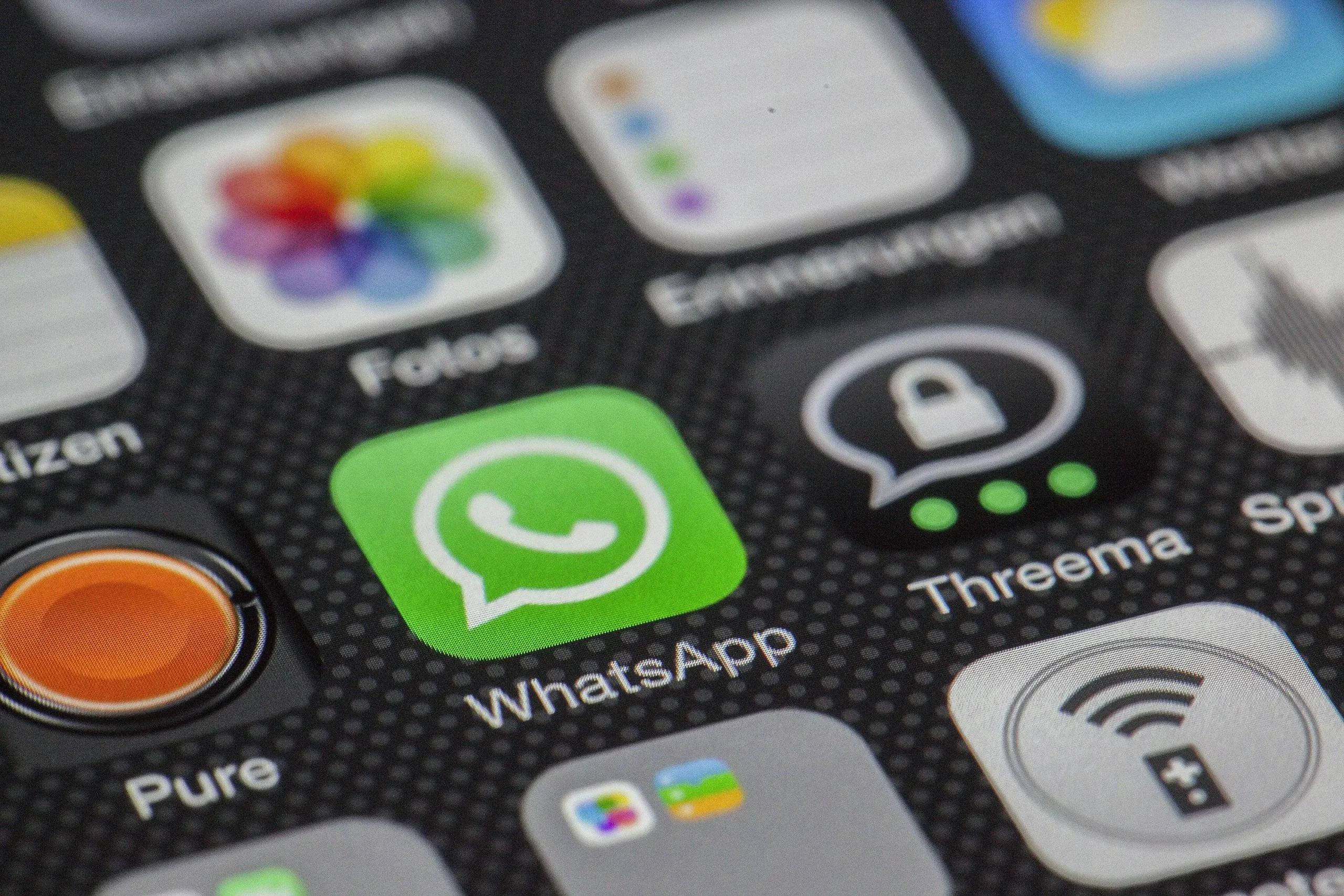
Every business wants a direct line to its customers, a channel where messages are read, responses come quickly, and conversion happens in conversation rather than through the passive consumption of content. WhatsApp marketing is that channel for a growing proportion of the world’s consumers, and for businesses operating in markets where WhatsApp is the dominant messaging platform, it has become one of the most powerful direct communication tools available.
WhatsApp has over two billion monthly active users globally, according to Meta’s official platform data, with particularly dominant penetration in the Middle East, South Asia, Latin America, and Africa. In Saudi Arabia, the UAE, Egypt, and across the Gulf Cooperation Council countries, WhatsApp is not simply a messaging application; it is the primary personal and professional communication platform for most of the population. Business communications, purchase inquiries, customer service interactions, and even financial transactions flow through WhatsApp in these markets in a way that has no equivalent in Western digital ecosystems.
The case for WhatsApp marketing is built on engagement metrics that no other digital channel matches. Research from multiple marketing analytics firms consistently shows WhatsApp message open rates above 90%, compared to email open rates that average around 20-30% even in well-managed subscriber lists. WhatsApp’s high open rates, instant delivery, and conversational format create engagement depth that broadcast channels can’t match.
At Ace Digital Marketing, WhatsApp is integrated into the digital strategies we build for businesses across the GCC and MENA region, particularly for businesses where the customer relationship is ongoing and where direct communication drives repeat purchases, appointment bookings, and customer loyalty. This guide covers everything required to build, run, and scale a WhatsApp marketing program that delivers measurable business results.
What Is WhatsApp Marketing and Why It Works
WhatsApp marketing is the practice of using WhatsApp, either through the WhatsApp Business application or the WhatsApp Business API, to communicate with customers, prospects, and subscribers for commercial purposes. This includes sending promotional messages, transactional updates, service notifications, and personalized offers directly to customers’ WhatsApp inboxes, as well as managing inbound customer inquiries and conversations through the same platform.
What distinguishes WhatsApp marketing from other digital marketing channels is the combination of reach and intimacy it achieves simultaneously. The platform’s scale, two billion users globally, ensures that for most businesses in GCC and MENA markets, the vast majority of the customer base is reachable through WhatsApp. The platform’s personal nature, the fact that users experience WhatsApp as their primary personal communication tool, means that business messages received there command a level of attention and engagement that messages in more impersonal channels simply cannot achieve.
The commercial results that well-executed WhatsApp advertising and messaging programs produce reflect this engagement advantage directly: higher open rates, higher response rates, faster sales cycle progression, and stronger customer retention than equivalent investment in email, SMS, or social media broadcast channels.
How WhatsApp Marketing Fits into Your Digital Strategy
Direct Communication with Customers
WhatsApp marketing occupies a distinct position in the digital marketing ecosystem, one that complements rather than competes with the broader channels of SEO, paid advertising, and social media. Where those channels excel at discovery and awareness, reaching customers who do not yet know the business, WhatsApp excels at conversion and retention, serving customers who have already discovered the brand and are at or past the point of first contact.
The directness of WhatsApp communication creates a customer experience that feels fundamentally different from receiving an email newsletter or seeing a social media advertisement. A message in WhatsApp arrives in the same interface where the customer communicates with their family and friends, and while this intimacy creates significant responsibility for brands to use the channel respectfully, it also creates the possibility of a genuinely personal brand-customer relationship that more distant marketing channels cannot achieve.
For businesses where the customer journey involves multiple interactions, pharmacies where patients need refill reminders, service businesses where appointment confirmations reduce no-shows, e-commerce businesses where order updates drive satisfaction and reduce support inquiries, WhatsApp is the most natural and highest-engagement channel for each of these touchpoints.
High Open and Engagement Rates
The engagement data that makes WhatsApp advertising and messaging so compelling for business use reflects the fundamental way people interact with the platform. WhatsApp messages arrive as push notifications on the home screen of the recipient’s phone, the same notification type that alerts people to messages from their closest contacts. This notification mechanism produces open rates that email, social media, and even SMS cannot match in most markets.
Beyond open rates, the conversational format of WhatsApp produces response rates that transform the channel from a broadcast medium into a dialogue medium. Customers who receive a well-crafted WhatsApp marketing message about a relevant offer, a product they have previously purchased, or a service they regularly use respond at rates that reflect genuine engagement rather than passive consumption. This responsiveness makes WhatsApp not just a delivery channel for marketing messages but a genuine customer relationship channel where businesses can understand customer needs, address objections, and build the trust that drives long-term loyalty.
Use Cases Across Different Industries
WhatsApp marketing has proven effectiveness across a wide range of industry contexts, with the specific use cases varying by the nature of the business and the customer relationship. Healthcare and pharmacy businesses, like AlJawaher Pharmacy, a Saudi pharmacy serving both individual and corporate clients, use WhatsApp for prescription refill reminders, medication availability notifications, and new product announcements that drive repeat visits and reinforce the pharmacy’s role as a trusted health partner. You can explore how WhatsApp integrates into a comprehensive pharmacy digital strategy in our AlJawaher Pharmacy Case Study.
E-commerce businesses use WhatsApp for order confirmation and shipping updates, cart abandonment recovery messages, exclusive offer announcements to existing customers, and post-purchase follow-up that generates reviews and repeat purchases. Service businesses use it for appointment reminders, service completion notifications, and satisfaction follow-up. B2B companies use WhatsApp for lead nurturing, proposal follow-up, and account management communication with key contacts.
Setting Up WhatsApp for Business
Choosing Between WhatsApp Business and API
The first infrastructure decision for any business implementing WhatsApp marketing is which of the two primary WhatsApp business platforms to use. WhatsApp Business, the free mobile application available on Android and iOS, is designed for small to medium-sized businesses that need basic professional WhatsApp functionality: a business profile, automated greeting and away messages, quick replies for common questions, and basic message organization through labels. It is managed from a single device and supports a single operator at a time.
The WhatsApp Business API, accessed through official Meta Business Solutions Providers, is the platform designed for businesses that need to scale WhatsApp communication beyond what a single device and operator can handle. The API enables multi-agent access from a customer communication platform, integration with CRM systems, automated message sending through approved message templates, chatbot deployment, and campaign-scale messaging that constitutes professional WhatsApp marketing at any meaningful volume.
The decision between WhatsApp Business and the API should be driven by volume and complexity requirements. For a small local business sending occasional messages to a few hundred contacts, WhatsApp Business is adequate. For a pharmacy running regular promotional campaigns, a service business managing hundreds of appointments, or an e-commerce operation sending order updates to thousands of customers, the API is the necessary infrastructure.
Optimizing Your Business Profile
The WhatsApp business profile is the first impression that contacts have of the business when they receive a message, and a complete, professional profile significantly increases the credibility of marketing messages and the likelihood that recipients will engage rather than block. A complete business profile includes: a professional business logo as the profile photo, an accurately entered business name exactly matching how the business presents itself across other channels, business category selection, a complete business description that communicates the value proposition concisely, physical address where applicable, business hours, website URL, and email address.
For businesses using the WhatsApp Business API, establishing and maintaining Meta Verified status, with the verified business badge visible in the profile, provides an additional credibility signal that distinguishes legitimate business communications from potential spam. Verification requires completing Meta’s business verification process through the Meta Business Suite, which validates the business’s legal registration and domain ownership.
Building and Managing Contact Lists
The foundation of any effective WhatsApp campaign is a contact list of people who have genuinely consented to receive communications from the business through WhatsApp. Unlike email, where contact list building through sign-up forms and lead magnets is a well-established and widely accepted practice, WhatsApp contact acquisition requires more intentional and explicit consent, both because of the personal nature of the channel and because WhatsApp’s own policies require that businesses only message users who have opted in to receive communications.
Effective WhatsApp contact list building strategies include: opt-in forms on the website and at physical locations that specifically request WhatsApp contact permission; click-to-WhatsApp advertising that generates opt-in conversations from interested prospects; QR codes at physical business locations that open a WhatsApp conversation when scanned; and organic social media promotion of WhatsApp subscription with a clear value proposition. Contact list management requires systematic segmentation, organizing contacts by customer type, purchase history, product interest, and engagement behavior, so that messages can be targeted to the relevant segments rather than broadcast to the entire list regardless of relevance.
Creating an Effective WhatsApp Campaign
Defining Campaign Goals and Audience
Every WhatsApp campaign begins with clarity on two questions: what business outcome should this campaign produce, and who specifically should it reach? Without precise answers to both questions, the campaign cannot be evaluated on meaningful criteria, and the messaging cannot be targeted with the specificity that WhatsApp’s conversational format demands.
Campaign goals for WhatsApp marketing typically fall into one of four categories: awareness and announcement, communicating new products, services, or promotions to the subscriber base; conversion, driving a specific action such as a purchase, appointment booking, or consultation request; retention, re-engaging lapsed customers or reinforcing the relationship with active customers; or service, delivering useful information, reminders, or updates that add value to the customer relationship without a direct commercial ask.
Audience definition for each campaign should identify the specific segment of the contact list for whom the campaign’s message is most relevant. A promotional message about a new range of skincare products from a pharmacy is relevant to customers who have previously purchased skincare products, but should not be sent to customers who have only ever purchased prescription medications, for whom the message represents irrelevant noise that will produce opt-outs rather than conversions.
Structuring a WhatsApp Marketing Message
A WhatsApp marketing message must be structured differently from an email newsletter or a social media post, because the context in which it is received is different. WhatsApp messages are read in a conversational interface on a mobile device, usually within minutes of delivery, and the first few lines visible in the notification preview determine whether the recipient opens and reads the full message or dismisses it.
Effective WhatsApp message structure follows a specific pattern: an opening line that immediately communicates relevance, using the recipient’s name and referencing something specific about their relationship with the business; a concise body that delivers the core message, the offer, the update, the reminder, or the information, in as few words as possible; and a clear, specific call to action that makes the desired next step obvious and easy to take. The conversational tone of WhatsApp demands writing that sounds like a person rather than a corporate broadcast, direct, warm, and specific rather than generic and promotional.
Timing and Frequency Best Practices
The timing and frequency of WhatsApp marketing messages have a greater impact on campaign performance than almost any other variable, because the intimacy of the WhatsApp channel means that poorly timed or overly frequent messages generate opt-outs and negative sentiment at rates that would not occur on less personal channels.
Research on WhatsApp message timing from marketing automation platforms consistently identifies late morning and early evening, generally 10 AM to 12 PM and 6 PM to 8 PM local time, as the windows with the highest open and response rates across most markets. Midday and late evening messages consistently underperform, with the latter also generating higher opt-out rates. Frequency should be calibrated to the value of each message rather than to a fixed schedule. A pharmacy that sends one genuinely useful message per week will maintain high engagement over time. The same pharmacy sending three to four messages per week will see engagement decline rapidly and opt-out rates rise as the channel becomes associated with noise rather than value.
WhatsApp Advertising Campaign Strategies
Click-to-WhatsApp Ads Setup
WhatsApp advertising campaigns through Meta’s advertising platforms, Facebook and Instagram, use a specific campaign objective called Click-to-WhatsApp that routes users who click on an ad directly into a WhatsApp conversation with the business rather than to a website landing page. This ad type is particularly powerful for businesses in markets where WhatsApp is the dominant communication channel, because it meets the prospective customer on the platform where they are most comfortable and reduces the friction between ad exposure and business contact.
Setting up Click-to-WhatsApp ads requires: a Meta Business Suite account connected to both the advertising account and the WhatsApp Business account; a connected Facebook Page; and a pre-configured greeting message that automatically opens in the WhatsApp conversation when the user clicks the ad. The greeting message should continue the conversation naturally from the ad’s content. If the ad promotes a specific product or service, the WhatsApp greeting should reference that same product or service and invite the user to ask questions or take the next step.
Integrating WhatsApp with Paid Channels
The most effective WhatsApp advertising strategies integrate WhatsApp not as a standalone channel but as the conversion and retention layer in a multi-channel customer journey. Paid advertising on Meta, Snapchat, and Google generates awareness and drives initial contact; WhatsApp captures that contact, nurtures it through conversation, and converts it into purchase or booking; and ongoing WhatsApp communication retains the customer and drives repeat engagement over time.
This integration produces a customer journey that is more engaging and more efficient than one relying entirely on website conversion, because WhatsApp’s conversational format allows objections to be addressed, questions to be answered, and trust to be built in real time. For businesses tracking full-funnel performance, our article on marketing performance provides the attribution framework that connects WhatsApp conversation data with paid advertising ROI measurement.
Retargeting Users Through WhatsApp
WhatsApp retargeting, sending messages specifically to contacts who have taken a specific action but not completed a desired outcome, is one of the highest-conversion applications of WhatsApp marketing. Customers who have initiated a purchase inquiry but not completed the transaction, patients who have not refilled a prescription by the expected date, or customers who have not visited in longer than their typical repurchase cycle are all retargeting opportunities where a timely, specific WhatsApp message can recover value that would otherwise be lost.
Retargeting through WhatsApp requires the integration of behavioral data from the website, from the CRM, or from the WhatsApp conversation history, with the messaging system, so that the right trigger events automatically generate the right message to the right contact at the right moment.
Writing High-Converting WhatsApp Marketing Messages
Personalization and Customer Segmentation
Personalization is the most powerful lever available for improving WhatsApp marketing message performance. The intimate, conversational context of WhatsApp makes generic broadcast messaging feel particularly intrusive, and the same context makes genuinely personalized messaging feel particularly relevant and valued. Personalization for WhatsApp goes beyond inserting the customer’s name in the greeting; it means referencing the specific products they have purchased, the specific services they have used, the specific questions they have asked, or the specific stage of their customer journey.
Customer segmentation, dividing the contact list into groups with similar characteristics, behaviors, or needs, is the operational infrastructure that makes personalization at scale possible. A pharmacy with five thousand WhatsApp subscribers cannot send fully individual messages to each contact, but it can send meaningfully different messages to the segment of diabetes medication patients, the segment of cosmetics customers, the segment of corporate health plan clients, and the segment of general consumers, with each message referencing something specific to that segment’s needs and history.
Clear Calls to Action
Every WhatsApp campaign message should end with a single, specific call to action, not multiple options that dilute focus, but one clear next step that makes the desired action obvious and easy. The most effective WhatsApp calls to action are those that can be completed within WhatsApp itself: “Reply YES to confirm your appointment,” “Send the word ORDER to receive your prescription,” “Tap the link below to see our new arrivals”, because they eliminate the friction of switching applications or navigating to a website.
Calls to action that ask WhatsApp users to visit a website landing page consistently underperform compared to those that keep the customer in the WhatsApp environment. When website navigation is necessary, the link should go directly to the most relevant page rather than to the homepage, minimizing the steps between the message and the conversion.
Using Media and Interactive Content
WhatsApp supports a rich range of media formats, images, videos, PDF documents, audio messages, and product catalog links that can significantly increase the engagement and conversion impact of WhatsApp marketing messages beyond what plain text alone can achieve. A promotional message accompanied by a high-quality product image converts at higher rates than the same message in plain text. A service announcement that includes a short video demonstrating the service communicates more effectively than a written description of equivalent length.
WhatsApp Business Catalog, the product catalog feature available in WhatsApp Business and the API, allows businesses to showcase products directly within the WhatsApp interface, enabling customers to browse and inquire about specific products without leaving the conversation. For retail businesses, the catalog transforms WhatsApp from a messaging channel into a lightweight shopping experience that keeps the customer engaged within the platform’s familiar environment.
Automating WhatsApp Marketing for Scale
Using Chatbots and Automation Tools
At the volumes required for WhatsApp marketing to function as a meaningful business channel, automation is not optional; it is the infrastructure that makes scale possible. WhatsApp chatbots, built on the WhatsApp Business API through authorized platform providers, handle the initial response to incoming messages, route contacts to appropriate conversation flows based on their inquiry type, answer frequently asked questions instantly without human involvement, and qualify leads before passing them to human agents for more complex conversations.
Chatbot design for WhatsApp must balance automation efficiency with conversational naturalness. A WhatsApp bot that responds to every inquiry with a rigid menu of numbered options feels impersonal in a channel that users associate with natural conversation. More effective chatbot architectures use natural language understanding to interpret free-text messages and respond contextually, creating an experience that feels closer to messaging a knowledgeable human than interacting with an automated system.
Creating Drip Campaigns
WhatsApp drip campaigns, automated sequences of messages sent to contacts at defined intervals following a trigger event, enable businesses to deliver planned communication journeys at scale without requiring individual message composition for each contact. A new customer who joins the WhatsApp subscriber list might receive a welcome message immediately, a brand introduction three days later, a first-purchase offer one week after joining, and a repurchase reminder thirty days after that, all triggered automatically by the initial subscription without any manual intervention.
Drip campaign design for WhatsApp requires the same discipline as email drip campaigns, with the additional constraint that the conversational intimacy of WhatsApp means the sequence must feel genuinely useful rather than automated. Each message in the sequence should provide value independently, not just move the contact through a conversion funnel that is transparent in its commercial intent.
Managing Customer Journeys
The customer journey management capability of the WhatsApp Business API, when integrated with a CRM and marketing automation platform, allows businesses to build sophisticated, behavior-responsive communication flows that adapt to each customer’s actions rather than following a fixed sequence regardless of behavior. A customer who responds positively to a promotional message and makes a purchase should be moved to a post-purchase communication flow rather than continuing to receive the promotional sequence. A customer who does not engage with three consecutive messages should be moved to a re-engagement sequence rather than continuing to receive standard campaign messages.
This behavioral responsiveness is what distinguishes genuine WhatsApp marketing infrastructure from simple bulk message sending, and it is the capability that produces the compounding engagement and retention improvements that make WhatsApp one of the highest-ROI customer communication channels available.
Tracking and Measuring WhatsApp Campaign Performance
Monitoring Delivery and Open Rates
WhatsApp provides delivery confirmation for every message, the blue double-check marks that indicate a message has been delivered to the device and read by the recipient. For businesses using the WhatsApp Business API through a third-party platform, aggregated delivery and read rate data is available at the campaign level, providing the baseline engagement metrics needed to evaluate message performance and compare across campaigns.
Delivery rates, the proportion of sent messages that reach their intended recipients successfully, identify list quality issues, blocked contacts, and inactive numbers that should be cleaned from the contact list. Read rates, the proportion of delivered messages that are opened, reflect the relevance and timeliness of the message content, the credibility of the sender, and the quality of the opening preview text that the recipient sees before opening.
Measuring Clicks and Conversions
Click tracking for links included in WhatsApp messages, using UTM parameters and shortened tracked URLs, connects WhatsApp campaign activity to website behavior and conversion outcomes in the analytics platform. This connection is essential for attributing revenue and conversions to specific WhatsApp campaigns rather than lumping WhatsApp-driven traffic into the “direct” attribution bucket.
Conversion measurement for WhatsApp-native actions, appointment bookings, prescription orders, service requests completed within the conversation, requires integration between the WhatsApp messaging platform and the business’s booking, ordering, or CRM system so that these conversions are captured and attributed correctly alongside website-driven conversions.
Analyzing Customer Engagement
Beyond delivery and click metrics, the behavioral patterns of WhatsApp subscribers reveal the health of the channel relationship and identify optimization opportunities that aggregate metrics alone cannot surface. Contacts who consistently read messages but never respond may indicate that the content is relevant, but the calls to action are not compelling enough. Contacts who respond to promotional messages but not service messages reveal preference patterns that should inform segmentation strategy. And opt-out timing analysis, identifying at which message or sequence point contacts choose to unsubscribe, reveals where the message frequency or content quality is falling below the threshold that keeps subscribers engaged.
Common Mistakes in WhatsApp Marketing
Sending Spam or Irrelevant Messages
The most damaging mistake in WhatsApp marketing, and the one most likely to result in account restrictions from Meta, is sending unsolicited or irrelevant messages to contacts who have not explicitly consented to receive them. WhatsApp’s platform policies strictly prohibit bulk messaging to contacts who have not opted in, and the platform’s spam detection systems are increasingly sophisticated at identifying broadcast messaging behavior that violates these policies.
Beyond the policy risk, irrelevant messaging to opted-in contacts produces a different but equally damaging outcome: opt-outs from subscribers who had genuine value to the business, degraded deliverability as WhatsApp’s quality rating system penalizes phone numbers that receive high block rates, and negative brand associations in a channel where the expectation is valuable, relevant communication. Our resource on SEO techniques draws a useful parallel: just as search engines reward relevant, high-quality content and penalize spammy tactics, WhatsApp rewards genuine relevance and penalizes broadcast behavior that ignores user consent.
Poor Timing and Frequency
Sending WhatsApp marketing messages at inappropriate times, late at night, during major public events, or in proximity to other recent messages, generates disproportionate negative responses because of the intrusive nature of push notifications from a personal messaging application. A message that would be unremarkable if received by email at midnight is significantly more disruptive when delivered to the phone’s home screen at the same time.
Message frequency errors compound over time: a business that sends one more message per week than its audience finds valuable will see engagement rates decline gradually, opt-out rates rise gradually, and the channel’s overall effectiveness erode, while attributing the decline to external factors rather than the frequency strategy that actually caused it.
Ignoring Customer Responses
WhatsApp marketing is a two-way channel, and businesses that use it as a one-way broadcast medium while failing to respond to the replies it generates miss the most valuable part of the channel’s potential. Customers who respond to a WhatsApp campaign message are demonstrating a level of engagement that exceeds what any passive digital channel produces. Failing to respond to these messages, or responding with automated replies that ignore the specific content of what the customer said, converts high-engagement prospects into disengaged or negative contacts.
Response management is the operational challenge that scales most directly with message volume, which is why chatbot infrastructure for initial response handling and agent routing is essential for any business running WhatsApp at a meaningful scale.
Best Practices for WhatsApp Advertising and Campaigns
Maintaining Compliance and Privacy
WhatsApp marketing compliance requires adherence to both Meta’s platform policies and the data protection regulations applicable in the markets where the business operates. Meta’s Messaging Policy for WhatsApp Business requires explicit opt-in consent from all contacts before commercial messages can be sent, prohibits certain categories of content in specific markets, and requires that message templates used through the API be approved by Meta before deployment.
Data protection compliance, including the national data protection regulations in GCC countries, requires that opt-in consent be documented, that contacts can easily withdraw consent and be removed from communication lists upon request, and that customer data used for WhatsApp targeting is handled in accordance with the applicable privacy framework.
Testing Different Message Formats
Systematic testing of message format variables, opening lines, message length, call-to-action wording, inclusion or exclusion of media, and timing produces the campaign intelligence needed to continuously improve WhatsApp marketing performance. Testing in WhatsApp requires dividing the target audience into equivalent segments and sending different message versions to each, then measuring the response rate and conversion outcome for each version to identify which elements drive the best performance.
The most impactful variables to test are typically the opening line, which determines whether the notification preview generates an open or a dismissal, and the call to action, which determines whether an opened message produces a response. Testing these elements systematically, one at a time, builds a library of performance knowledge that makes each subsequent campaign more effective than the last.
Continuous Optimization
The most successful WhatsApp advertising and campaign programs treat the channel as a continuously improving asset rather than a set-and-forget broadcast mechanism. Each campaign’s performance data, delivery rates, read rates, response rates, conversion rates, and opt-out rates inform the next campaign’s strategy. Contacts who consistently engage should be identified and treated as a high-value segment. Content themes that drive above-average engagement should be further developed. Timing windows that consistently outperform should become the default scheduling standard.
This continuous optimization discipline is the difference between WhatsApp marketing, which compounds in effectiveness over time, and programs that plateau quickly because the initial setup is never revisited or refined.
Action Plan to Launch and Scale WhatsApp Marketing Successfully
Building a WhatsApp marketing program that delivers sustained business results requires a structured build sequence that establishes the infrastructure before investing in campaign content and scale. The starting point is platform setup: choosing the appropriate WhatsApp Business platform for the business’s scale requirements, completing the business profile to professional standard, and implementing the opt-in collection mechanisms, on-site, in-store, and through paid advertising, that will build the contact list.
With infrastructure established, the first campaign should be a simple, high-value message to the existing contact list, a genuinely useful piece of information, a meaningful exclusive offer, or a warm welcome to subscribers who have recently opted in. This first message establishes the channel’s value proposition for subscribers and generates the initial response and engagement data needed to calibrate timing, tone, and content approach for subsequent campaigns.
As the contact list grows and campaign experience accumulates, the program can be scaled through automation, chatbot deployment for initial response handling, drip campaign sequences for new subscriber onboarding, and behavior-triggered messages for cart abandonment, appointment reminders, and repurchase prompts. Integration with paid advertising through Click-to-WhatsApp campaigns amplifies the contact list growth rate while targeting precisely the audience profiles most likely to become valuable long-term subscribers.
The businesses that build the most effective WhatsApp marketing programs are those that treat the channel with the same strategic discipline they apply to SEO, paid advertising, and content, defining goals, building the right infrastructure, measuring outcomes rigorously, and optimizing continuously based on what the data reveals. If you need expert support building a WhatsApp marketing strategy, integrating WhatsApp with your broader digital marketing program, or scaling your existing WhatsApp campaigns, Ace Digital Marketing is ready to help.
Our team brings the strategic expertise and technical experience to build WhatsApp programs that generate real, measurable business growth. Whether you prefer a direct call or a quick email, we will get in touch and build the right approach for your business and audience. Grow your business now!